
CONSEQUENCES OF THE CLOSURE OF THE STRAIT OF HORMUZ
Since the beginning of the attacks by Israel and the United States on Iran, serious disruptions in maritime transport have occurred, which are also affecting other global logistics routes. While much is discussed about supply disruptions and rising prices, the actual problem is far greater than it may appear.
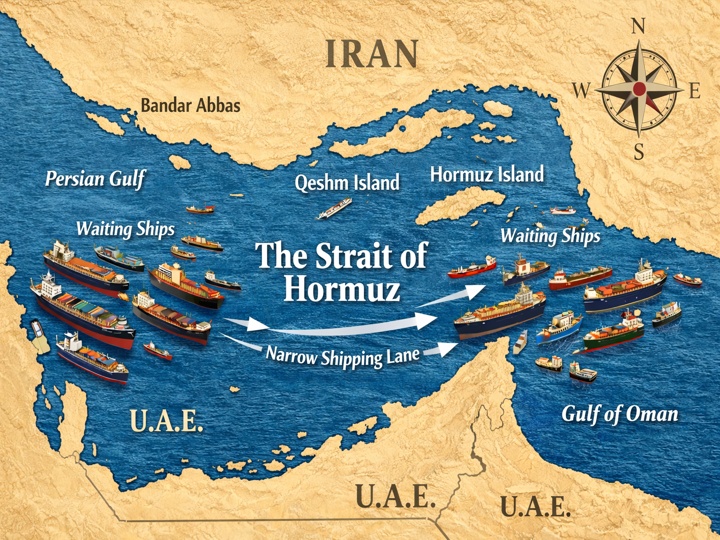
Photo: Sloven Inter d.o.o.
As a result, the world’s largest shipping companies have started introducing surcharges on all existing and new vessel bookings. The level of these surcharges varies significantly depending on the carrier. New charges such as EBS (Emergency Bunker Surcharge) and ECS (Emergency Conflict Surcharge) are being implemented, both of which, typically cause a substantial and immediate increase in transportation costs. These surcharges are generally unavoidable, as they are added to both future and already confirmed bookings.
Another consequence of these disruptions are longer delivery times, as most cargo vessels are now rerouting around the African continent, extending transit times by at least 10–14 days. Maritime logistics from the Middle East has therefore become more expensive and slower. Delivery times for shipments from China to Slovenia now range between 54 and 65 days. For urgent cargo, customers can still decide for rail transport, although prices are typically two to three times higher than sea freight. Current rail transit times are between 18 and 24 days from terminals in China to Budapest.

Photo: Sloven Inter d.o.o.
In line with rising fuel costs, air and road transport prices are also increasing on a weekly basis, placing additional pressure on the business environment. From the moment, an order is placed to final delivery; numerous unforeseen additional costs may occur and that significantly increases final price of products on our market.
In the past season, we also witnessed a significant drop of volumes in export of logs business from Slovenia and Croatia. The weaker export performance was influenced by U.S. import duties, as well as higher transport and service costs in Slovenia and Croatia. The usual start of the season was delayed into the winter months.
A positive development this season is the new trade agreement between the European Union and India, which will, within seven years completely eliminate mutual import duties on all goods. This will also increase opportunities for trade between Slovenia and India. For the business sector in Slovenia, this signals the opening of a new business environment.
Like all successful businesses, we are prepared, for the new challenges this business environment brings. Our clients are international companies and well-established Slovenian firms seeking suppliers or customers in other global markets. With our many years of experience and broad expertise in resolving logistical challenges, we are a reliable partner in organizing and managing logistics services for our clients. Every inquiry we receive is handled with a high level of professionalism, and with personalized approach throughout all stages of transport execution.
Should you require transport services, please feel free to contact us at info@sloven-inter.si or call us at +386 (0)3 541 20 10.
Source: https://www.sloven-inter.si/english/